Walmart & the Walton Family: A Legacy of Innovation and Success
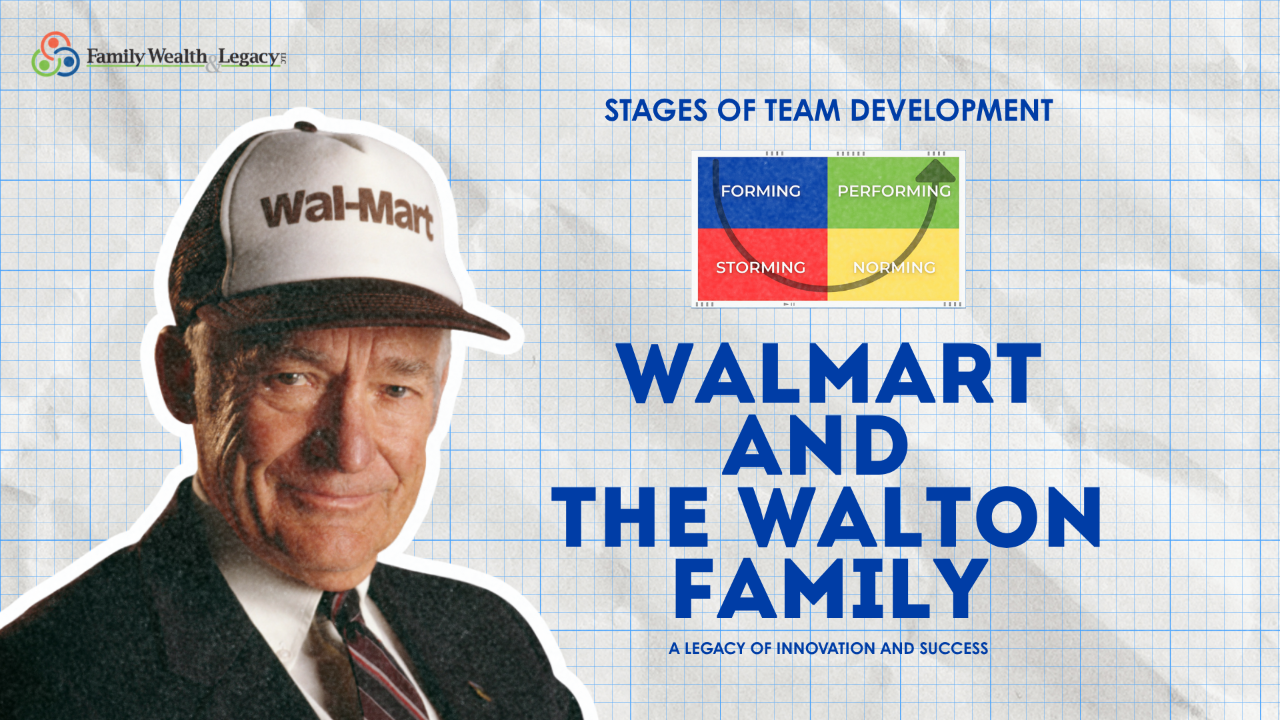
From its humble beginnings in rural Arkansas to becoming a global retail giant, Walmart's trajectory showcases the power of effective team development on a captivating journey that embodies the spirit of entrepreneurship, determination, and collaborative teamwork. Let's dive deeper into the Walmart narrative using Bruce Tuckman’s Stages of Team Development theory, exploring its early years and how it aligns with the stages of team development, unveiling valuable insights we can apply in our own professional endeavors.
Forming
In 1962, Sam Walton opened the first Walmart store in Rogers, Arkansas. Driven by his vision of providing affordable goods to rural communities, Sam gathered a team of dedicated individuals who shared his unwavering commitment to customer service and everyday low prices. They focused on building strong relationships with suppliers and fostering a culture centered on customer satisfaction. Sam Walton's brother, Bud Walton, was one of the earliest supporters of the company. He helped finance the opening of Walmart's first store and provided crucial support and guidance to Sam Walton. This forming stage of team development saw the birth of Walmart's core values and a united team poised to revolutionize the retail industry.
Storming
As Walmart expanded beyond its initial store, the team faced a series of challenges. They encountered resistance from established competitors, encountered logistical hurdles, and navigated through uncharted territory. The storming phase tested their resilience, adaptability, and ability to overcome obstacles. In the early years, discount retailing was often associated with low-quality products. Walmart had to combat negative perceptions and establish itself as a reliable provider of affordable goods without compromising quality. Through open communication, shared problem-solving, and a willingness to learn from mistakes, the team weathered the storms, emerging stronger and more determined to succeed.
Norming
Walmart's success can be attributed, in part, to its emphasis on building a strong company culture. Sam Walton fostered an environment where employees were valued, empowered, and encouraged to contribute their unique perspectives. The team embraced a set of shared values, including respect for individuals, service to customers, and striving for excellence. This norming stage solidified Walmart's identity as a customer-centric organization, where collaboration and a collective sense of purpose drove innovation and growth.
Performing
Walmart's relentless focus on operational efficiency, cost management, and customer satisfaction propelled it to the performing stage. The team harnessed technology, established efficient supply chain practices, and leveraged economies of scale to offer customers a wide range of quality products at unbeatable prices. With a dedicated workforce committed to serving customers, Walmart achieved remarkable success, expanding its reach across the United States and eventually becoming a global retail powerhouse with over 10,000 stores.
The story of Walmart and the Walton family is a testament to the transformative power of effective team development. It showcases the significance of aligning shared values, fostering open communication, and empowering individuals to contribute their best. The Walmart team's ability to navigate challenges, adapt to a changing retail landscape, and maintain a customer-centric approach has been key to their enduring success.
As we reflect on the Walmart journey, let it inspire us to nurture a strong team culture, promote open collaboration, and continuously innovate in our own pursuits. By embracing the stages of Bruce Tuckman’s eam development theory and leveraging the power of collaboration, we can overcome obstacles, drive positive change, and achieve remarkable success in our professional endeavors.
It's perfectly natural for family businesses, like any other team, to encounter fluctuations throughout the stages of team development. Although the example of Walmart appeared to seamlessly transition from forming to performing, such smooth journeys are unrealistic.
Changes within the leadership team almost always triggers a shift back to the forming stage. Additionally, unforeseen circumstances like COVID-19 affected businesses across the board, pushing them back into the storming phase, regardless of their prior success. By understanding where your family business stands in the team development process, you can maintain a positive outlook and remain focused on achieving success despite these temporary setbacks.
If you're experiencing a sense of stagnation or difficulty advancing through these phases while pursuing growth, don't hesitate to reach out to us. Our team is ready to provide the support and guidance you need.
Sources:
https://corporate.walmart.com/about/sam-walton
https://www.walmartmuseum.com/content/walmartmuseum/en_us/timeline/decades/1980/artifact/2648.html